Archives
-
br Acknowledgements This work was supported by National Natu
2023-04-20
Acknowledgements This work was supported by National Natural Science Foundation of China (Nos. 21376172, 21528601 and 21621004) and the Natural Science Foundation of Tianjin from Tianjin Municipal Science and Technology Commission (Contract No. 16JCZDJC32300). Introduction Alzheimer’s disease
-
Rising depolarization was observed during and decaying
2023-04-20
Rising depolarization was observed during and decaying depolarization after the photostimulation (Fig. 1D). The slow decrease of the firing rate after photostimulation is also a remarkable characteristic of the striatal neuron (Figs. 1E, 2 and 3), since the cortex pyramidal neurons (data not shown)
-
Until now five muscarinic receptor M genes
2023-04-19
Until now, five muscarinic receptor (M1-5) genes have been cloned, but, M1-3 receptors are functionally recognized in the lungs. Smooth muscle contraction is mainly mediated by M3. M2 may also participate in the contraction via Gi protein which leads to a decrease in cAMP. On the other hand, M2 is l
-
APETx2 br Introduction O Dowd et al identified a
2023-04-18
Introduction O’Dowd et al. identified a gene very similar to angiotensin type-1 receptor in 1993 (O’Dowd et al., 1993). The specific selective ligand of this receptor called APJ receptor was determined by Tatemoto et al. in 1998 as apelin (Tatemoto et al., 1998). The high expression of apelin and
-
br Conclusions The present protocol for localizing or spotti
2023-04-18
Conclusions The present protocol for localizing or “spotting” the site of action of an antioxidant in a micro-heterogeneous medium is based on the differences in its reactivity vis-à-vis the series of amphiphobic TEMPO derivatives 1a–f. Plots of the relative antioxidant effectiveness of a given A
-
br Method of literature search br
2023-04-17
Method of literature search Disclosures Acknowledgment The authors thank and acknowledge Mrs. Jaini Parekh, BFA, for illustrating the diagram in Figure 1. An overview of angiogenesis Angiogenesis is a biological process through which there is the formation of new blood vessels from pre-
-
br Experimental procedures br Results
2023-04-17
Experimental procedures Results Discussion Acknowledgments SRE and EBL contributed equally to this smo inhibitor work. SRE, EBL, and MJT designed experiments, SRE, EBL, MCH, and AEI conducted experiments, SRE and EBL analyzed data, and EBL and MJT wrote the manuscript. We would like to
-
br Special report Financial and
2023-04-17
Special report – Financial and personal benefits of early diagnosis Acknowledgments The Alzheimer’s Association acknowledges the contributions of Joseph Gaugler, Ph.D., Bryan James, Ph.D., Tricia Johnson, Ph.D., Allison Marin, Ph.D., and Jennifer Weuve, M.P.H., Sc.D., in the preparation of 201
-
All desired compounds with a carboxylic acid
2023-04-17
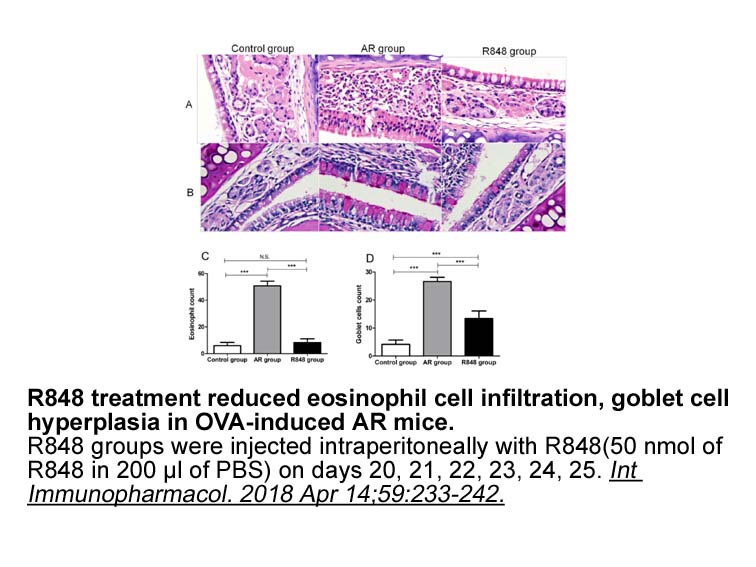
All desired compounds with a carboxylic Exemestane substituent at N1 position of the quinoxalinone scaffold and a variety of aromatic substituents at C3 position were obtained by the syntheses starting from methoxy-substituted 3-chloro-quinoxalin-2(1)-ones () prepared as previously. As shown in , c
-
Because activation of HT A
2023-04-17

Because activation of 5-HT2A receptor is capable of facilitating dopamine cell activity and dopamine release (Bortolozzi et al., 2003), and this action of dopamine is known to mediate rat maternal behavior, especially maternal motivation (Afonso et al., 2007, Febo et al., 2010, Li and Fleming, 2003,
-
Unlike AK inhibition the inhibition
2023-04-17
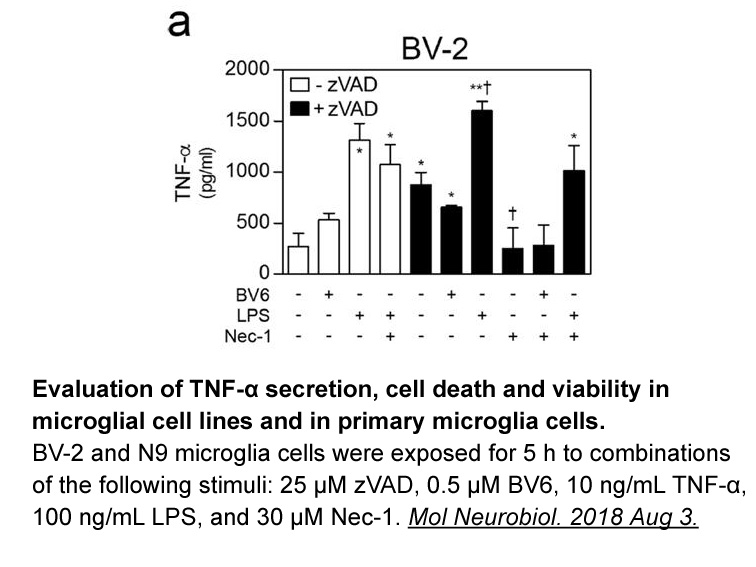
Unlike AK inhibition, the inhibition of ADA activities by EHNA had little effect on spinal reflex potentials, although EHNA did increase extracellular adenosine levels. One explanation for this discrepancy is that the adenosine increase seen herein was not sufficient to inhibit reflex potentials. In
-
There is also a literature on
2023-04-17
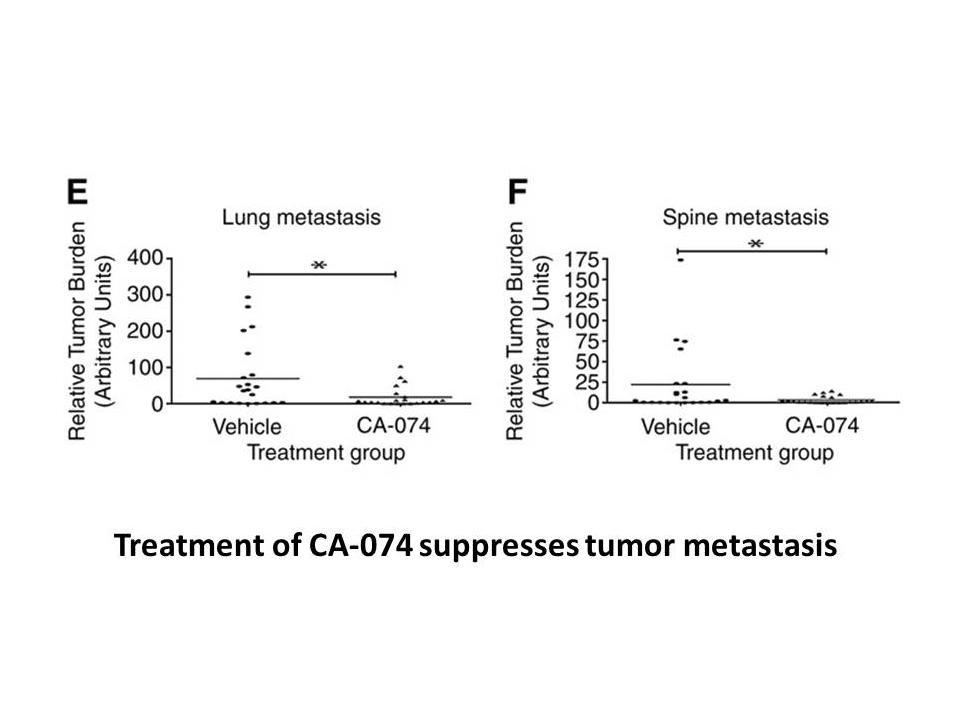
There is also a literature on the impact of commodity (consumption) taxation under imperfect competition. Besley (1989) applies a Cournot model, in which production takes place under IRS and in which free entry leads to an excessive number of firms in the market. Introducing a distortive specific co
-
The LO has so far
2023-04-17
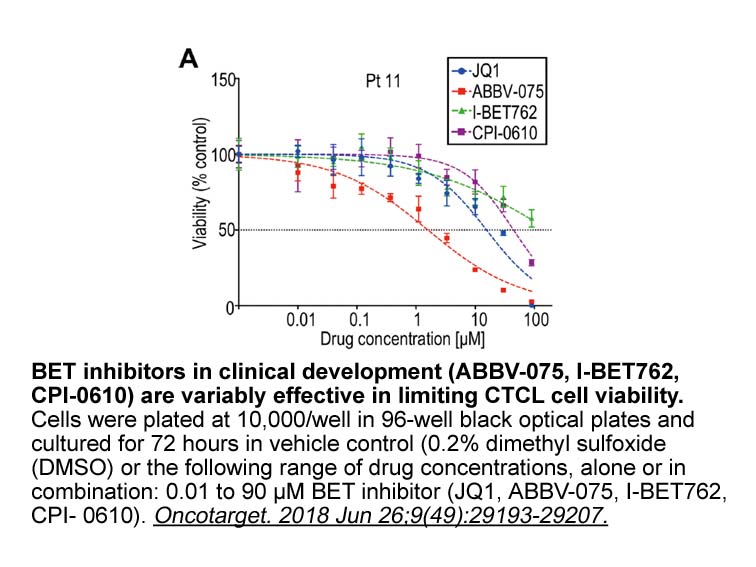
The 15-LO-1 has so far only been found in humans and rabbit reticulocytes [3], [20] and the rabbit 15-LO-1 protein demonstrate 81% identity to the human 15-LO-1. However, rabbit monocytes express an enzyme with mainly 12-LO activity [20], [21]. The high degree of sequence conservation between these
-
br Conclusions and future direction
2023-04-17
Conclusions and future direction ER(−)/PgR(+) breast cancers have a distinct clinical course, response to treatment, and molecular features when compared to other breast cancer types, however some of them are actually technical artifacts or consequences of too high definitions of positivity. Acco
-
The allosteric site of class C receptors
2023-04-17
The allosteric site of class C receptors is generally located on the extracellular side of the TM domain (Brauner-Osborne et al., 2007, Christopher et al., 2015, Dore et al., 2014, Gregory et al., 2011, Harpsoe et al., 2017, Kniazeff et al., 2011, Pin and Prezeau, 2007, Urwyler, 2011, Wu et al., 201
3632 records 49/243 page Previous Next First page 上5页 4647484950 下5页 Last page